
Impersonating Customer Service Scam: Mobile Phone Turned into a “Card Reader” Man Loses Over HK$1 Million
2026-08-28
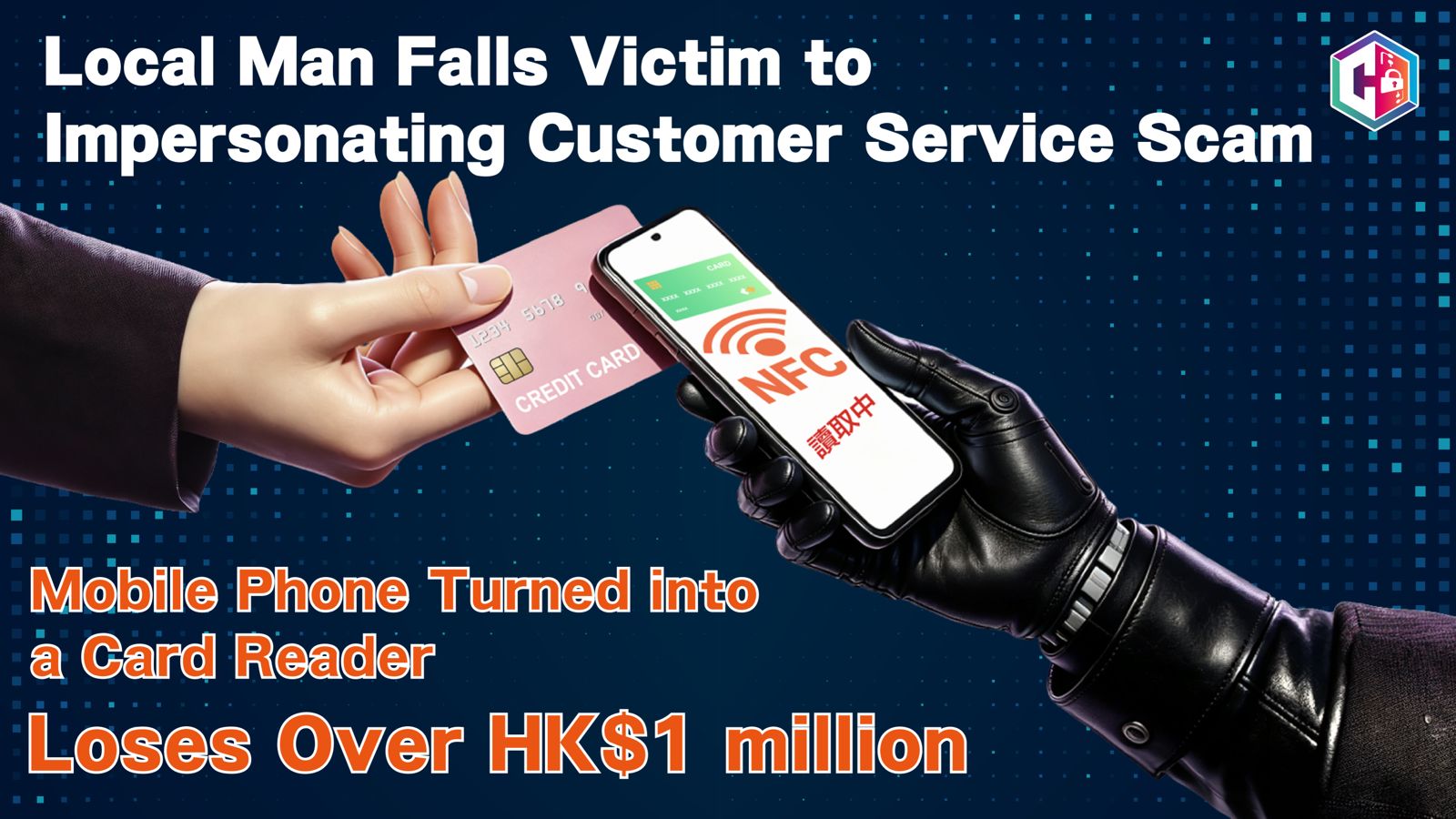
Recently, a victim was deceived by a scammer posing as a logistics customer service representative into downloading an unknown application (app) and enabling NFC on his mobile phone. This effectively turned his phone into an “electronic payment terminal”. The scammer remotely read the victim’s credit-card information and carried out a series of overseas transactions. After the card limit was exhausted, the scammer persuaded the victim to repay the outstanding balance, claiming that the original and subsequent amounts would be refunded together. The scammer then used the card fraudulently again until the limit was reached once more. The victim ultimately lost more than HK$1 million.
The ADCC reminds members of the public not to trust any phone call or message that asks you to download an unknown app, enable screen sharing, or place a credit card close to a mobile phone to “process an online refund”.
Defrauding Tricks
Claiming that goods were damaged to arrange a refund
A scammer posing as a logistics-company employee called the victim and falsely claimed that the goods had been damaged. The victim was asked to switch to WhatsApp to contact customer service and arrange a refund.
Luring the victim into clicking an unknown link
The fake logistics-company customer service representative asked the victim to provide a payment-receiving QR code. The scammer then falsely claimed that the “payment QR code was invalid” and said that the logistics company had purchased insurance. An unknown link was subsequently sent to the victim, who was lured into clicking it to apply for a refund through customer service on a fraudulent website.
Using forged documents to gain the victim’s trust
After the victim accessed the fraudulent website, the fake customer service representative asked for the victim’s personal information and the last four digits of the victim’s telephone number. The scammer then immediately sent a forged compensation-approval document and falsely claimed that the matter had been successfully handled.
Persuading the victim to download an unknown app
The fake website customer service representative provided an APK file for download and asked the victim to open the unknown app to process the refund.
Enabling NFC
The fake website customer service representative instructed the victim to enable the NFC function on the mobile phone, claiming that this was necessary for the phone to read the credit-card information and process the refund.
Using the card-reading function to carry out remote transactions
The fake website customer service representative instructed the victim to open the unknown app and hold the credit card against the mobile phone while secretly conducting online transactions.
The scammer subsequently exploited the phone’s “electronic payment terminal” function to use the victim’s credit card remotely for overseas transactions.
Persuading the victim to settle the card balance
After the credit-card limit had been fully used, the scammer told the victim that the amounts would later be refunded together and persuaded the victim to settle the outstanding balance first. Once the victim had repaid the card balance, the scammer immediately carried out further remote transactions until the credit-card limit was exhausted again. The scammer then ceased contact.
Our Advice
Do not rashly call phone numbers in unknown SMSs;
Do not click on unknown or suspicious links;
Do not enter personal or sensitive information on websites from unknown sources;
Do not casually place your credit card against your phone to avoid theft;
Download apps only through official channels;
Stay alert if you receive an official bank SMS notification about a suspicious overseas transaction with a “#” symbol, or a warning message from your bank’s official app!
If in doubt, please call the “Anti-Scam Helpline 18222” for enquiries!