
Latest Scam Alerts
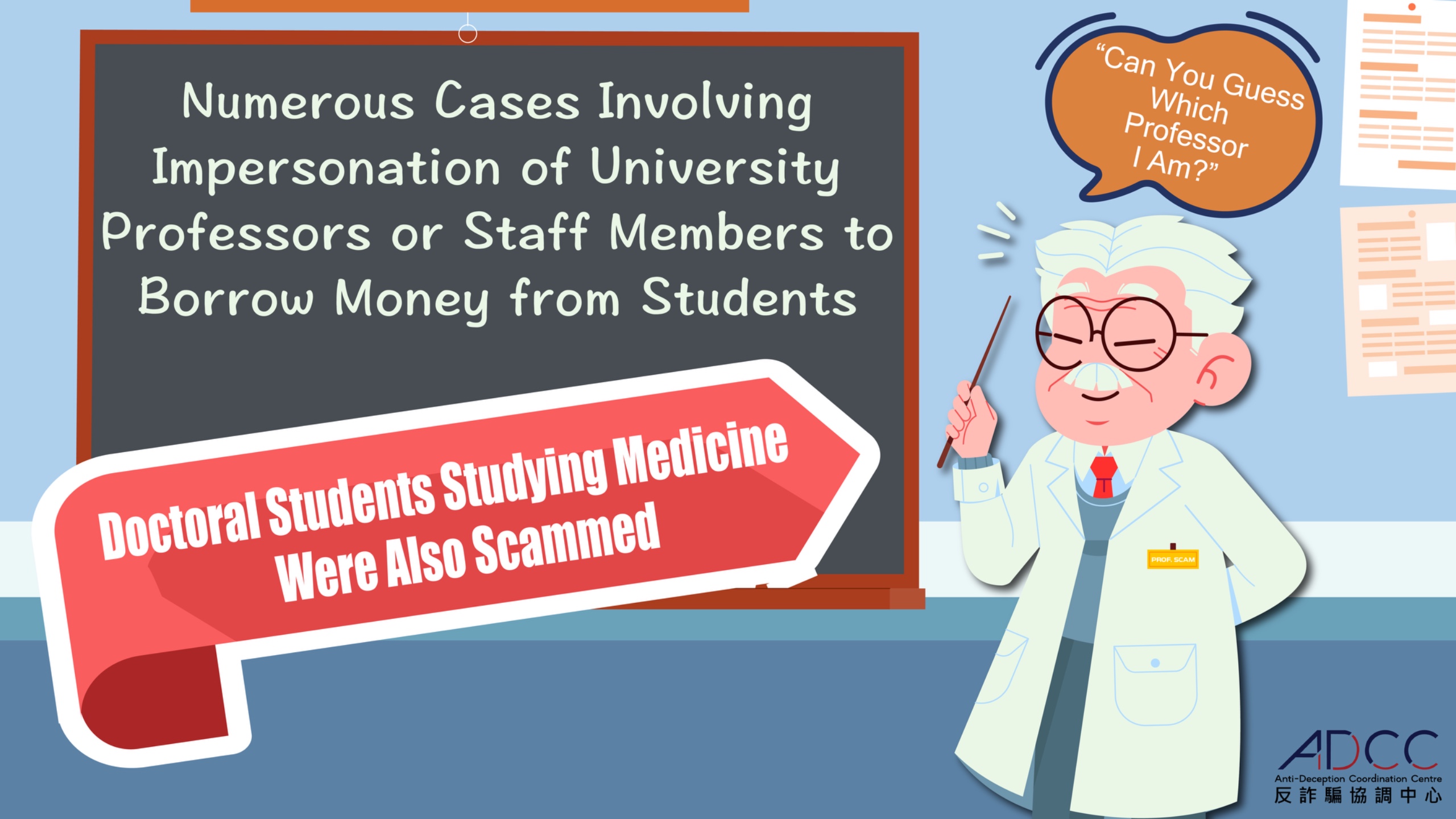
Numerous Cases Involving Impersonation of University Professors or Staff Members to Borrow Money from Students Victims Include Doctoral Students Several Universities Involved
Numerous Cases Involving Impersonation of University Professors or Staff Members to Borrow Money from Students Victims Include Doctoral Students Several Universities Involved
2026-01-15
Recently, a number of cases in which university students were scammed have been reported to the Police. The tricks were always impersonation of university professors or staff members to borrow money. The victims included bachelor’s, master’s and doctoral students. The losses ranged from $5,000 to $10,000.
It is worth noting that the defrauding trick of “guess who”, which mainly targeted seniors in the past, has been found to scam young people lately! Defrauding tricks evolve steadily, so people of all ages may be targets. We must stay vigilant and not to let our guard down!
Defrauding Trick One: “Guess Who”
- A scammer calls a victim and asks them to guess who the scammer is.
- Once the victim speaks the name of a professor/instructor, the scammer impersonates that person at once and proposes switching to WhatsApp for contact.
- On WhatsApp, the scammer fabricates excuses for borrowing money from the victim and instruct the victim to transfer money to a designated bank account.
- The scammer can no longer be reached upon receiving money.
Defrauding Trick Two: Impersonating University Staff/Person-in-Charge of Events
- A scammer calls a victim, claiming that they are a staff member of a university department or the person-in-charge of a university society. They say that the time or venue of an event has to be changed, and provide a “personal” WhatsApp contact number.
- The victim goes to the venue according to instructions or uses WhatsApp to contact the scammer on their own initiative. However, the scammer claims that they are busy and asks the victim to help them by transferring an “advance payment” to a designated account, promising to repay the payment later.
- The scammer can no longer be reached immediately after the transfer is made.
Our Advice
- Do not hastily believe unsolicited incoming calls.
- University professors or staff members will never borrow money from students, and will never ask them to transfer money to personal accounts.
- When receiving “guess who” calls, you may reply, “Please tell me your name and the purpose of calling me”, or just hang up.
- You must verify any request for money through official channels (e.g. call your institution, visit the department concerned in person for enquiry).
- Before making transfers, call the professor or staff member whom you really know for verification, or the “Anti-Scam Helpline 18222”.